

Maqbool Fida Husain (1915-2011) was a pivotal figure of 20th-century Modernism and a founding member of the influential Bombay Progressive Artists’ Group (PAG). Often referred to as the “Picasso of India,” Husain was instrumental in propelling a new visual language for the post-colonial nation, merging international modernist aesthetics with traditional Indian frameworks. Though he was primarily self taught, Husain later refined his style at the Sir J.J. His practice synthesizing traditional subject matter with avant-garde technique. Cubism in particular served as a point of departure, adapting the movement into a deeply personal style characterized by dynamic, painterly brushstrokes and a vibrant, narrative-driven palette. His iconic motifs, ranging from the vitality of horses and ancient mythology to global figures like Mother Teresa offer a bold, multifaceted approach to contemporary storytelling. Husain’s legacy is cemented by India’s highest civilian honors, including the Padma Vibhushan. His global stature was uniquely recognized in 1971 when he was invited to exhibit alongside Pablo Picasso at the São Paulo Biennale. Today, his work is held in prestigious permanent collections worldwide, including the Museum of Modern Art (MoMA), New York; the Victoria and Albert Museum, London; and the National Gallery of Modern Art in New Delhi and Mumbai.
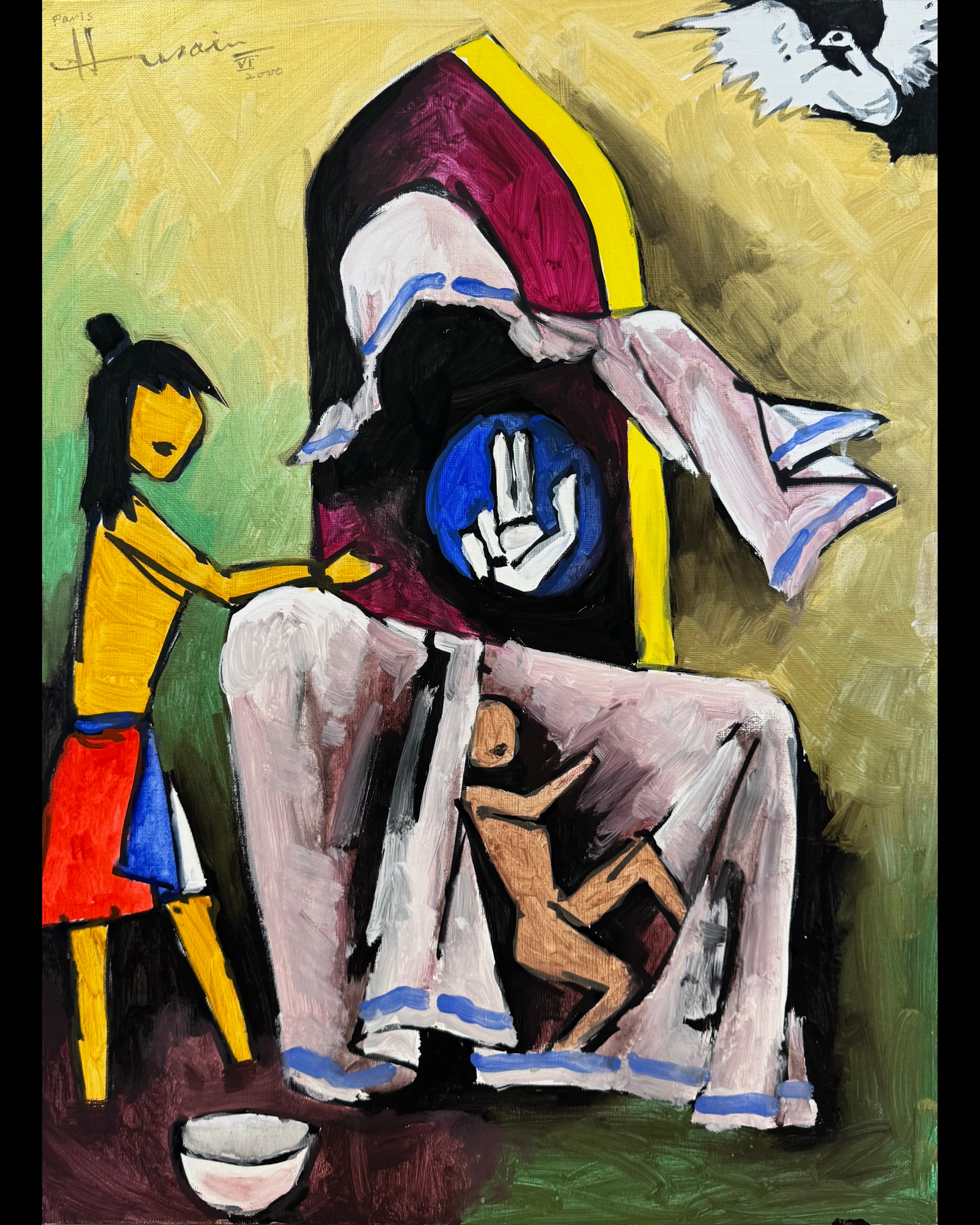
“Untitled (Mother Teresa)”
2000
28 3/4 x 21 1/4 inches
Acrylic on canvas
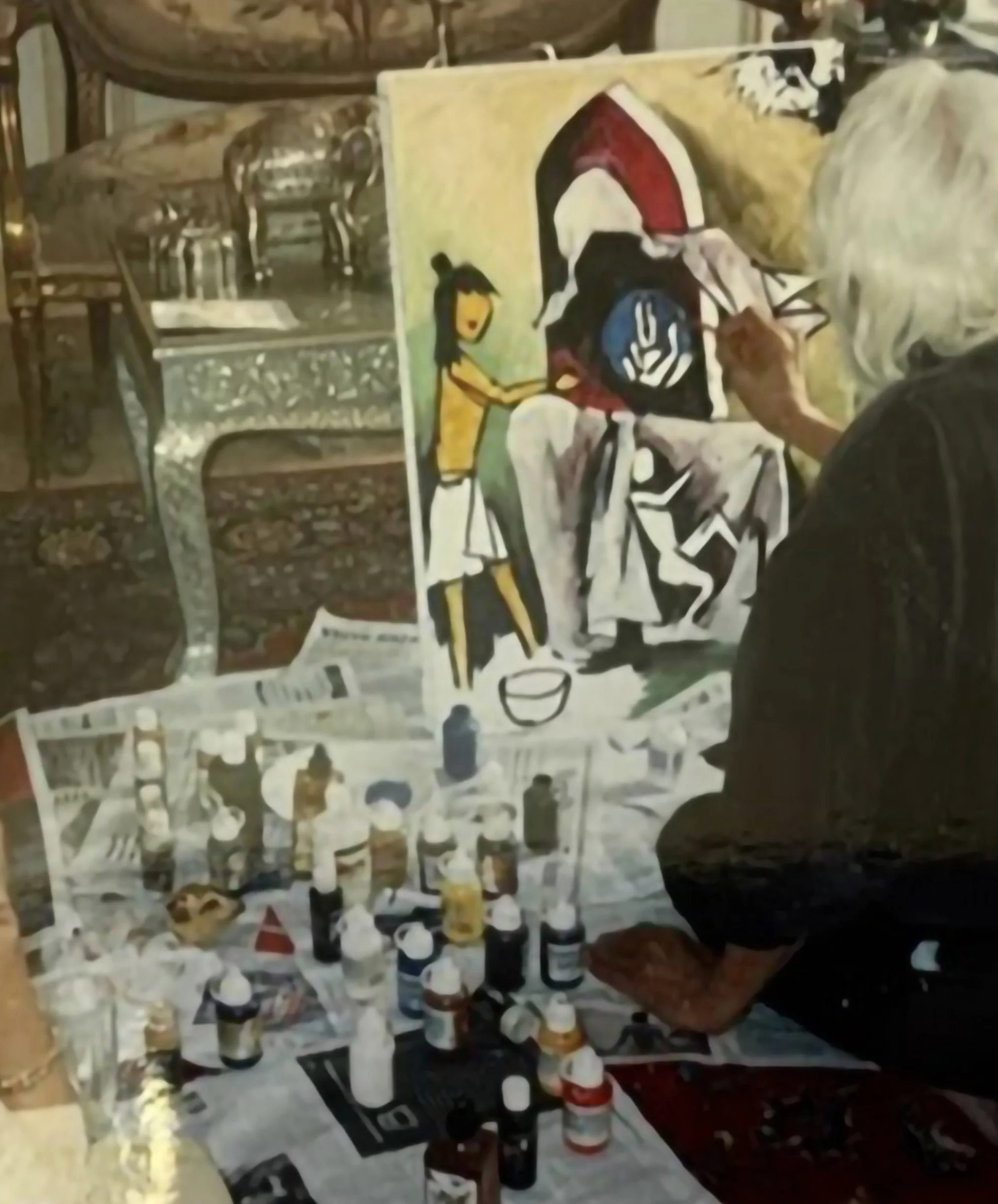
M.F. Husain painting “Mother Teresa” for his patron in Paris